 Skip to content


Navigating the recognition of a foreign diploma in the UK can seem daunting, especially if you’re eager to study further or find a job. But don’t worry—this guide covers everything you need to know. Whether your degree is from the EU, Asia, Africa, or anywhere else, you’ll find answers and clarity here.
How to Get Your Foreign Diploma Recognised in the UK
The UK is a highly sought-after destination for professionals and students from all over the world. Whether you’re moving for work, study, or personal growth, ensuring that your foreign diploma is recognised is a crucial step. Let’s unravel the process, requirements, and smart strategies to help you succeed in getting your qualifications acknowledged and valued.


Understanding UK Qualification Standards
In the UK, qualifications are categorised under the Regulated Qualifications Framework (RQF), which ranges from Entry Level to Level 8 (PhD). Recognition of foreign diplomas hinges on their comparability to this framework.
For example:
A bachelor’s degree from India, Nigeria, or Brazil might be equivalent to an RQF Level 6.
A technical diploma could align with Level 3 or 4, similar to A-Levels or a Higher National Certificate (HNC).
Understanding this helps you position your credentials correctly when applying to universities or employers.

Why Medical Record Conversion Is Crucial in the UK
The UK healthcare system is thorough but relies heavily on digital records and standardized forms. If your records are in another language or do not conform to UK clinical standards, they may not be usable. Misinterpretation of a foreign document could lead to incorrect treatment—something neither doctors nor patients can afford.
Why Recognition Matters
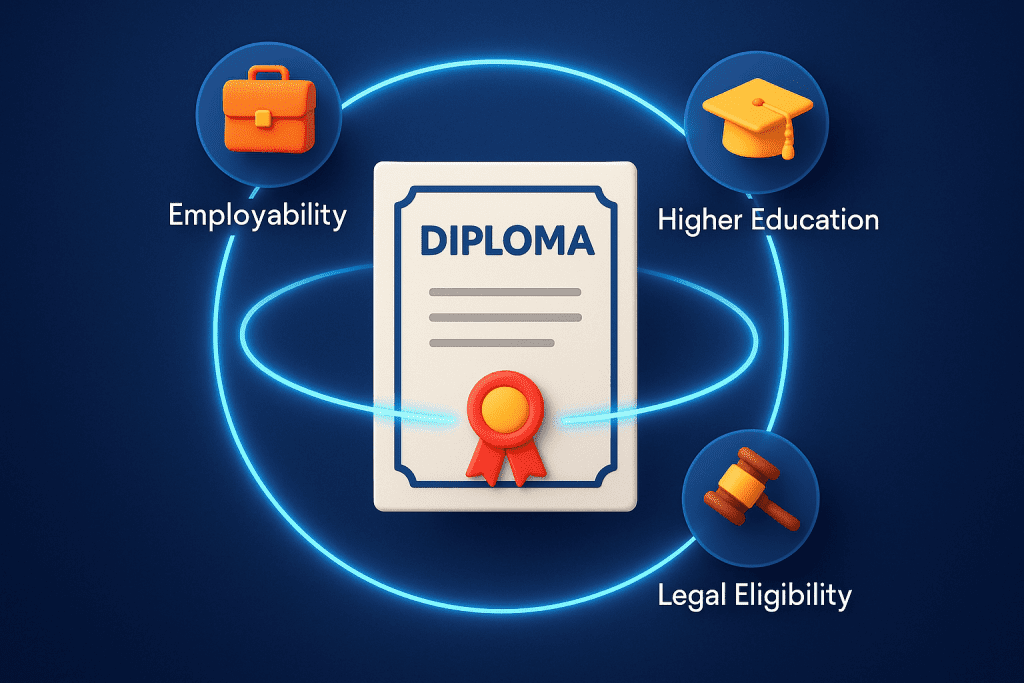
Recognition isn’t just a formality—it can directly impact your:
Employability: Many employers in the UK require proof that your qualification meets UK standards.
Higher education admission: Universities will want a clear understanding of your academic background.
Legal eligibility: Some professions (like medicine or teaching) require government or professional body recognition before you can work.
In short, getting your diploma recognised opens doors.
Key Recognition Bodies in the UK
Several organisations handle diploma recognition:
UK ENIC (formerly UK NARIC) – the primary body for comparing international qualifications.
Ofqual – the Office of Qualifications and Examinations Regulation.
Professional bodies – such as the General Medical Council (GMC), Solicitors Regulation Authority (SRA), or Engineering Council.
Each has its own criteria and process depending on your field.
What is UK ENIC (formerly NARIC)?
UK ENIC is the official body designated by the UK government to evaluate international qualifications. They offer:
Statement of Comparability – confirms the UK equivalent of your qualification.
Visas and Nationality services – for immigration purposes.
They assess qualifications from over 200 countries, ensuring your diploma is properly contextualised within the UK education system.
Documents Required for Recognition
To apply for recognition, you’ll need:
Degree certificate (original or certified copy)
Academic transcripts (detailed marks or grades)
Official English translations
Proof of identity (passport or ID)
Make sure these are scanned clearly, in PDF or JPEG format.
Translation and Legalisation of Documents
All non-English documents must be translated by certified professionals. Legalisation may also be necessary:
Apostille: Required for some countries, verifying the authenticity of the original document.
Certified translations: Must be from recognised translators, especially for use in legal or academic contexts.
Never cut corners here—it can cause significant delays.
Process to Apply for Recognition
Here’s a step-by-step look:
Visit the UK ENIC website.
Create an account.
Upload your documents.
Select the appropriate service (e.g., Statement of Comparability).
Pay the service fee.
Await confirmation and receive your results via post or email.
Simple, but detailed attention is essential.

Timeline for Getting Recognised
Typically, it takes:
10 to 15 working days for standard services.
Up to 30 days during peak periods.
Fast-track options are available at a premium price.
Always plan ahead, especially if you’re on a visa deadline.
Costs Involved
Recognition isn’t free. Expect to pay:
£49.50 for the Statement of Comparability
£12 extra for delivery (UK address)
£30 or more for legal translations
Budget at least £100–£150 in total.

How to Check if Your Qualification is Recognised
Before applying, you can:
Search UK ENIC’s sample comparisons.
Contact universities or employers directly for advice.
Use forums like The Student Room or Reddit for personal experiences.
Being proactive can save time.
Recognition for Work Purposes
Employers may request:
UK ENIC comparability report
English language proficiency
Professional accreditation (for roles like engineers, teachers, etc.)
Some sectors are more flexible than others, especially in creative or tech industries.
Recognition for Study Purposes
When applying to university, you’ll likely go through UCAS or direct admissions. Most institutions accept the ENIC Statement or conduct their own assessment based on:
Country of origin
Institution reputation
Course content
Check with each institution beforehand.
Professional Qualifications Recognition
Some professions require additional steps:
Doctors: Must register with the GMC and may need to pass the PLAB exam.
Teachers: Need Qualified Teacher Status (QTS) via Teaching Regulation Agency.
Lawyers: Solicitors need SRA recognition or may have to complete conversion courses.
It’s more rigorous—but entirely doable.

Dealing with Partial Recognition
Sometimes, your diploma may only be partially recognised. In that case:
Enrol in a bridging course
Take additional assessments
Gain work experience to bolster your case
Think of it as a stepping stone rather than a setback.
English Language Proficiency
If your diploma isn’t in English, you’ll also need to prove your language skills:
IELTS (minimum 6.0–7.5 depending on the programme)
Some exemptions apply if your studies were in English.
Common Mistakes to Avoid
Let’s save you from the usual headaches:
Submitting blurry or incomplete documents
Ignoring document translation rules
Missing deadlines
Not checking for recognition before applying
Always double-check everything before submission.
What if Your Diploma Isn’t Recognised?
Don’t panic. You still have options:
Appeal the decision
Reapply with additional documentation
Consider retraining or gaining a UK qualification
Many have successfully built careers in the UK despite initial setbacks.
Post-Brexit Impacts on Diploma Recognition
Recognition of EU qualifications has become more nuanced post-Brexit. If you’re from the EU:
You may need to go through UK ENIC now
Mutual recognition agreements are evolving
Be prepared for possible new steps
Non-EU applicants haven’t seen much change.
Recognising Vocational and Technical Qualifications
Not all education is academic. For vocational diplomas:
Compare with City & Guilds, BTEC, or NVQ standards
ENIC can still provide assessments
These are highly valued, especially in trades and service sectors.
Digital Recognition & Blockchain Diplomas
Yes, the future is here. Some institutions now issue blockchain-verifiable diplomas:
Reduces fraud
Speeds up verification
Accepted by forward-thinking UK employers and schools
Watch this space—it’s growing fast.
Tips for a Smooth Recognition Process
Here’s how to keep stress at bay:
Start early—don’t wait till the last minute
Organise documents in clear folders
Reach out to UK ENIC or a consultant if stuck
Check reviews from others who’ve gone through it
Patience really does pay off.
Case Studies and Success Stories
Maria from Brazil had her engineering diploma recognised within three weeks, thanks to detailed translations and prompt uploads.
Ahmed from Egypt pursued teaching in the UK, completed a one-year QTS programme, and now teaches GCSE Maths in Birmingham.
Yuki from Japan used a blockchain diploma, getting recognition in record time.
Your success story could be next.
FAQs on Recognition
Yes, provided it’s recognised and relevant to the role.
Usually 10–15 working days, depending on the service chosen.
You might be exempt from English proficiency tests, but check with the institution.
Yes, if documents are missing or unverified. But they often request more info rather than outright rejection.
Some do, while others assess qualifications independently.
No. Older qualifications can still be recognised.
Conclusion
Getting your foreign diploma recognised in the UK is a rewarding process—one that unlocks countless opportunities for growth, education, and employment. Yes, there are rules, procedures, and sometimes a bit of red tape. But with this guide in hand, you’re now equipped to navigate it all confidently. Stay proactive, organised, and hopeful. Recognition isn’t just about validation—it’s about honouring the effort you’ve already invested in your education.
Ready To Get Started?
Fill out our form, and we’ll promptly follow up with a detailed overview of your project.
Positive Reviews From Customers
Professional and accurate translations. Highly recommended for UK ENIC applications!
The translation service was efficient, and my Statement of Comparability was processed without delays!
Great support throughout the process. Quick and reliable service.


Anne K.